Mechanics
Mechanics is defined as the branch of physics studying how objects move through space and time - as well as why.
There are two general types.
Kinematics Dynamics How something moves Explains why something moves Position, displacement, velocity, acceleration Cause of motion No concern for what caused the motion The forces that cause or change motion
Motion
Motion is defined as a continuous change in an object’s position overtime, relative to a fixed reference point. There are four types:
Type Definition Image Translational Movement across a straight line. Rotational Movement around a fixed axis, usually at a fixed distance too. Oscillation Back-and-forth about a centre point. Periodic Motion that repeats at regular intervals.
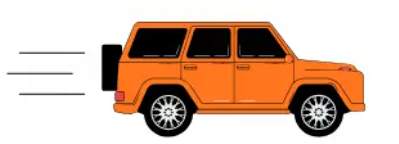
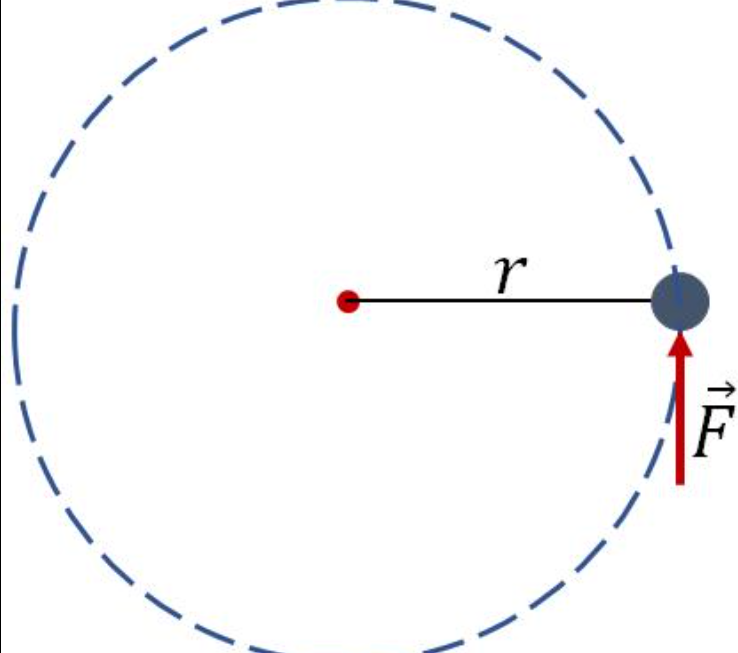
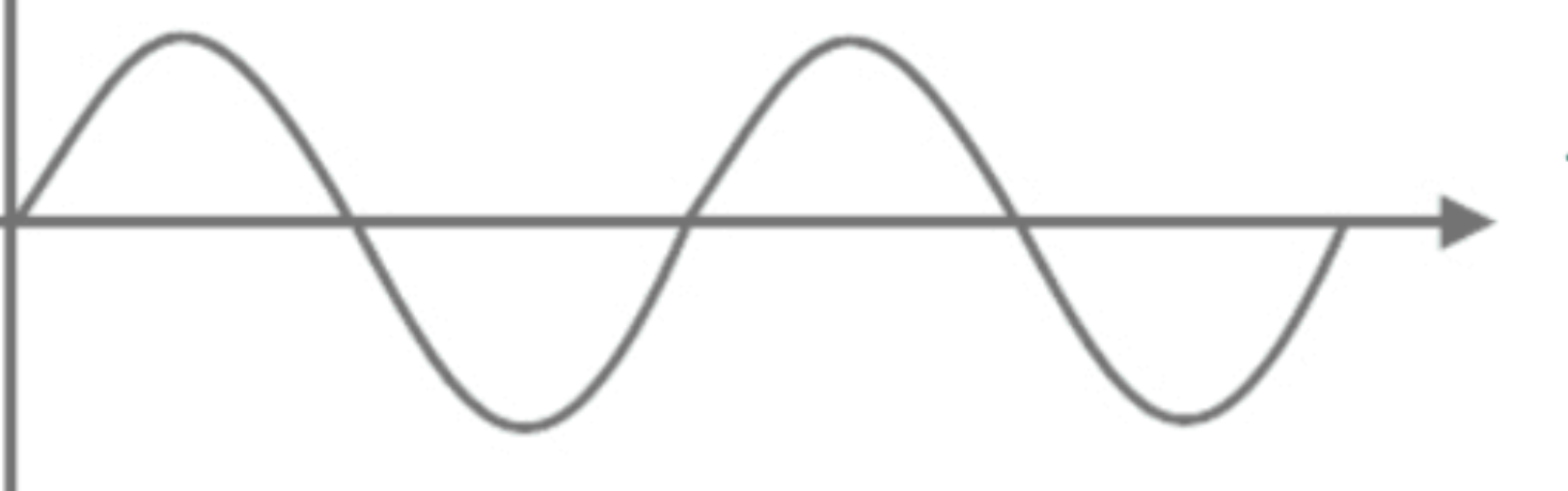
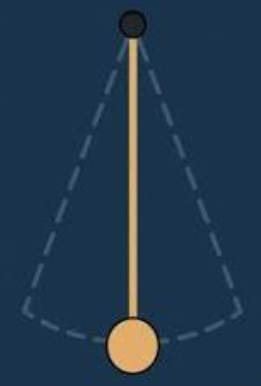
Motion can also be described with Scalar and Vector Quantities.
- Scalar: Magnitude only. Speed = Distance/Time
- Velocity: Magnitude and direction. Velocity = Displacement/Time
If an object were to remain at their original position after all their movement, their displacement is
zero.
Review the Scalar and Vector lesson from Physics Q1 for this.
A rather quick summary of these forces. I'm unsure as to whether or not I can recall a lot of this..
Force: Contact & Non-Contact
Force is any interaction that when unopposed, changes an object’s motion.
-
Contact Force
This requires objects to physically touch.
Type Definition Friction The force of colliding objects. Tension The force of withheld energy through stress on an object. Applied Force that is applied onto an object to get it to move. Normal The force of the surface pushing back perpendicular to its own face of collision. ![[../Snapshots/gs-mechanics_005_20260811_17-16.png 350]] ![[../Snapshots/gs-mechanics_006_20260811_17-16.png
-
Non-Contact Force
Acts at a distance without any touching needed.
Type Definition Strong Nuclear Force Short-range force acting between protons and neutrons, which is what’s binding the quarks making up these atoms. Weak Nuclear Force Responsible for radioactive decay, including beta decay & positron emission. This is the force that changes the identity of quarks inside protons and neutrons, and changes one type of particle into another. Essential for nuclear fusion. Electromagnetic Force Responsible for the flow of electrons - charges of opposites attract, and like ones repel. This force holds atoms together into molecules. Gravitational Force Weakest of the four, but has infinite range. An attractive force that pulls a mass to another relative to their distance. Greater mass, greater pull - thanks to Einstein’s General Relativity.![[../Snapshots/gs-mechanics_007_20260811_17-16.png 600]]
> Two of these hold infinite range, being the latter two.
Displacement
There is, like with the others, a linear and rotational force.
Quantity Linear Rotational Displacement Change in location m θ Velocity Displacement over time m/s ω Acceleration Change in velocity m/s^2 μ(?)
Kinematic Quantities
These measurable quantities describe how an object moves without needing to know the force causing it. Each has a linear and rotational version.
This is going so fast paced. Dude, kill me now..
The formula for rotational/angular displacement is ∆θ = ∆s/r
Where:
- θ is an angular value measured in radians
- ∆s is the displacement/movement of an arc
- r is the radius
By the way, check this site for more high-level elaboration on vectors and angular displacement
Problem
For a bicycle wheel that has a radius of 0.5m, the wheel rotates so that the point on the rim travels an arc length of 1m. Find the angular displacement.
The answer was.. 0.5. Don't ask me how, I'll get to it later. I think it was 0.5/1, which was incorrect.
Velocity
Defined as the speed of an object in a specific direction, or the change in displacement over time referred to as v(t) or vavg. There are a few types.
-
Translational Velocity
The change of displacement overtime expressed in
m/sorkm/hIt measures motion on a straight line and can vary depending on the particular point in time. It can be one of two below:
Type Definition Instantaneous Velocity in a given instant moment or time. Which can be ready on the speedometer. Average Refers to the net or averagevelocity for the whole journey.
-
Rotational Velocity
The change of angular displacement overtime expressed in
rad/sorrevolutions per minute (rpm)
Acceleration
This is instead defined as the change in velocity over time. In linear motion it’s expressed as m/s^2 while in rotation, rad/s
Dynamics
Newton’s Laws & Inertia
Law Definition First An object resists change to its motion. Second Force = mass times its acceleration (F = ma). Third Every action has an equal and opposite reaction.
Inertia depends on mass - the rotational equivalent is the Moment of Inertia:
I = m(r
Torque
This is defined as the rotational version of force. It rotates and twists around a pivot point instead of pushing it in a straight line. Defined as:
τ = Force x Distance from pivot
The more force or more distance from the pivot, the more torque there is. This is why doors, seesaws, and wrenches are designed the way they are.
Biomechanics & Ergonomics
Biomechanics Ergonomics Applies physics to how living bodies move - helping doctors, coachs, and designers improve human performances Designs products and systems that fit the body’s natural movement
These two work together for letting people improve quality of life for humans easily.
In Short
Field Summary Mechanics Kinematics (how motion looks) + Dynamics (why it happens) Motion Translational, rotational, oscillation, periodic Lines and Rotations Linear and Rotational Movement Force Contact, Non-Contact, and Kinematic Quantities Dynamics Inertia and Torque Biomechanics & Ergonomics Human QOL using Physics and understanding of the human anatomy