The Five Different Symmetries
Symmetry is defined to occur when an object or landscape looks the same with or after a transformation in its orientation. They said us in understanding the properties of shapes & patterns. A pattern is also defined as a measurement giving expression.
Sir Jude made us watch a video made by 'La Bul..' forgot the entire title. But it was about symmetry, and was an animation about symmetrical design, basically.
Two Types of Symmetries
-
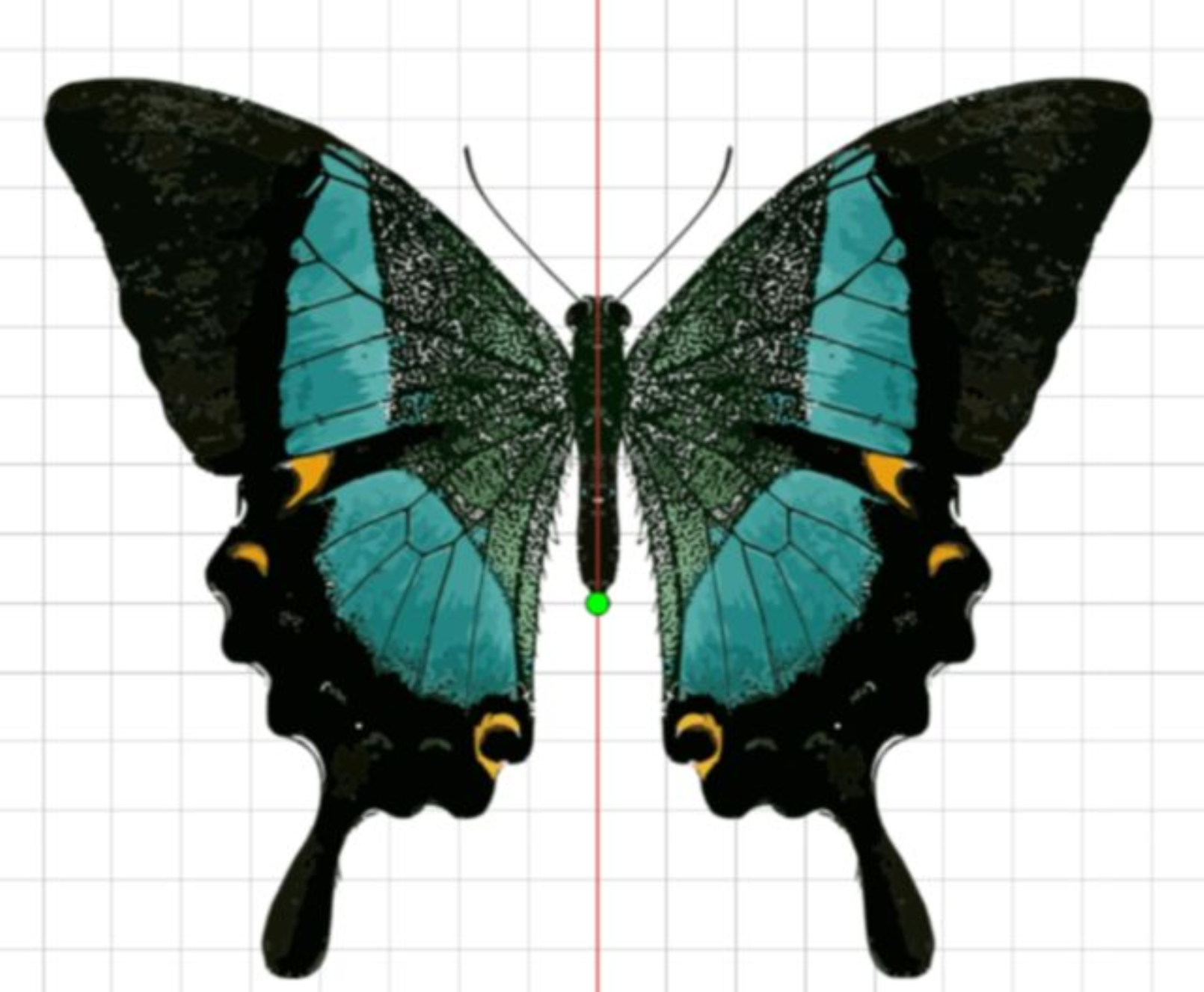
Reflection Symmetry
Also called as
lineormirrorsymmetry. It is when ** of the other half, and divides a shape into identical parts.
-
Rotational Symmetry
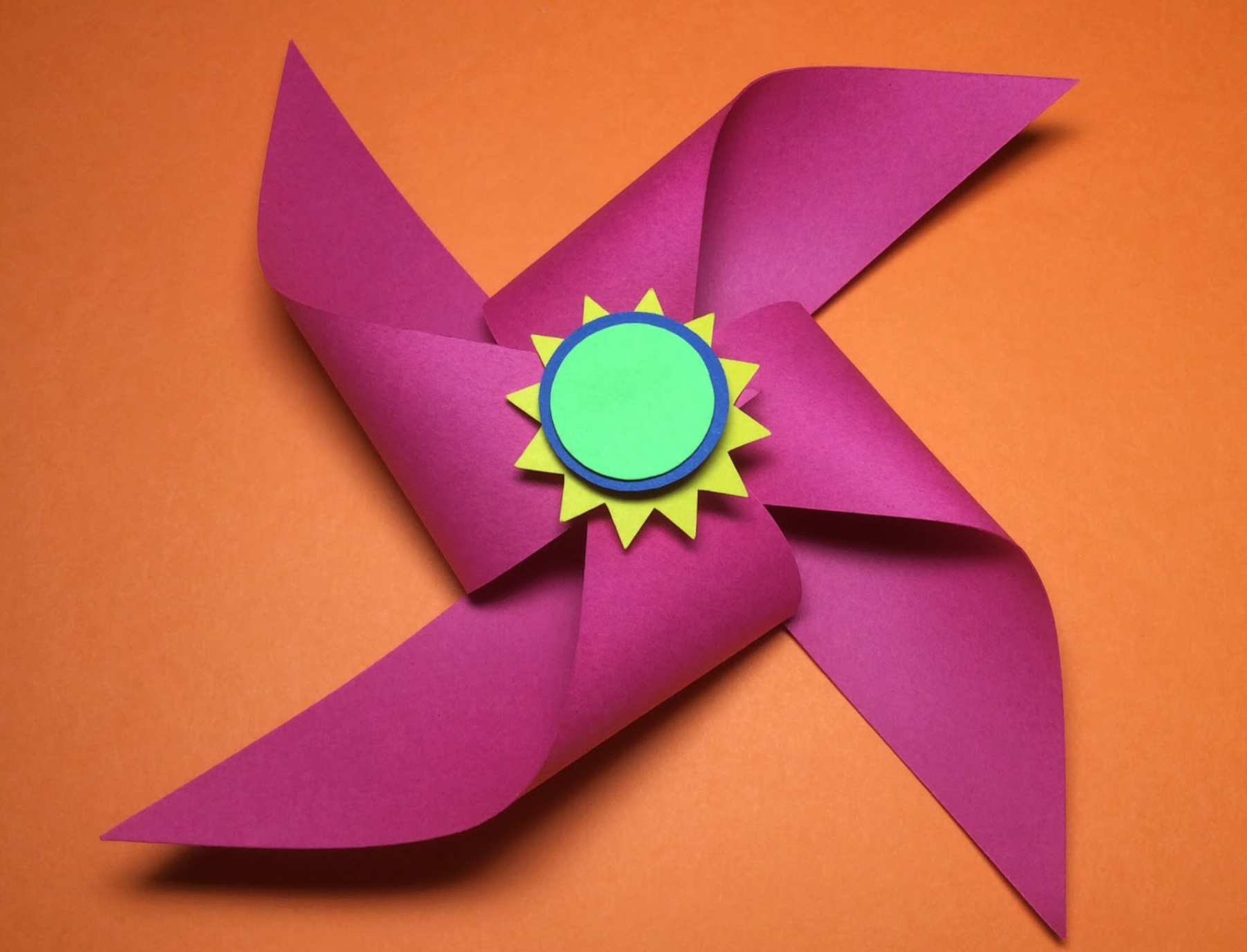
This is symmetry where an object looks the same after being rotated around a centre of rotation. The common angles for these types of symmetries are degrees from 90, 120, 180, and 360. The order of rotation is equal to
360 / angle
In the early 2000’s, cartoons were created by rapidly displaying sequences of hand-drawn images, but also using rotational symmetry with the invention of the Phenakistoscope in 1833.
Types of Linear Transformation
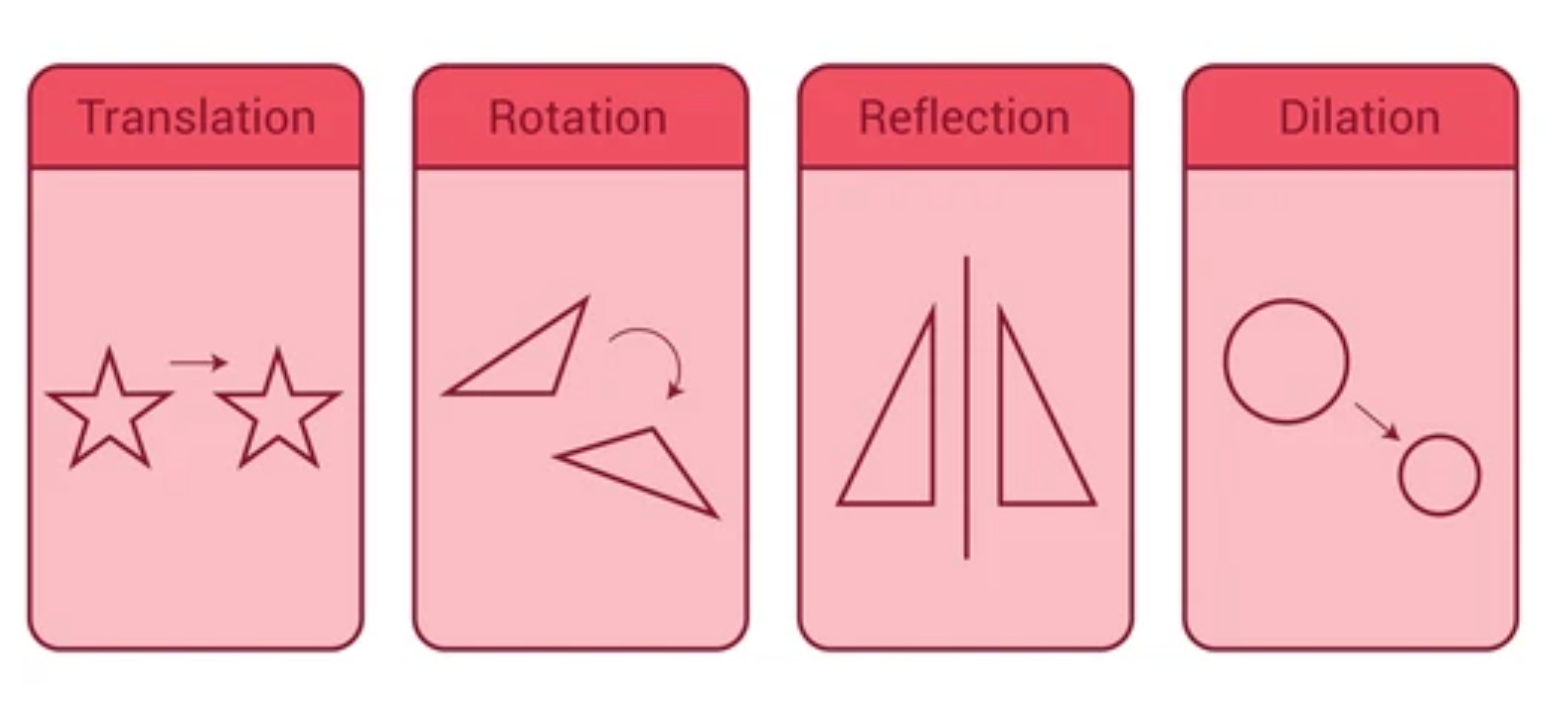
Linear Transformation Definition Translation Moving the shape without rotating/resizing Reflection Creating a mirror image across a line of symmetry Rotation Turning a shape around a fixed point Dilation Enlarging or reducing an objects w/proportions kept Glide Reflection Combination of alternating translation across reflectional symmetry
Table for quick review. Look above.
There are 5 different types of linear transformations that occur. They are..
-
Translation
Defined as moving the shape without rotating or resizing it.
-
Reflection
Defined as creating a mirror image across a line of symmetry. Each point and its mirror point are equidistant to the line
-
Rotation
Defined as turning a shape around a fixed point.
-
Dilation
Defined as enlarging or reducing size but keeping the proportions & shape of an object.
-
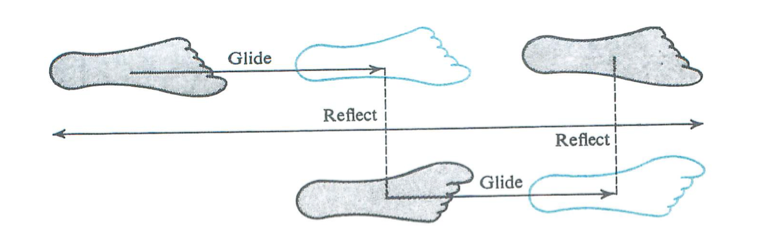
Glide Reflection
Defined as the combination of translation and reflection, where in shape is reflected and then translated across the line of symmetry repeated in an alternating fashion.