This lesson is the English version of Intrapersonal na Komunikasyon.
Understanding Intrapersonal Communication
Intrapersonal Communication unlike Interpersonal Relations is the process of communication with oneself. It takes place within a person’s mind through thinking, self-talk, reflection, imagination, and memory.
The same person acts as both the sender and receiver of the message. It happens continuously throughout life and includes both conscious thoughts (ones a person is aware of) and subconscious thoughts (ones that influence feelings and actions without being immediately noticed).
There are five common examples of intrapersonal communication.
Type Definition Example Self-talk The silent conversation people have with themselves. Used to give reminders, manage emotions, or encourage oneself before a difficult task. Before reporting in class, a student tells themselves, “I feel nervous, but I studied my topic and can explain it clearly.” Self-reflection Examining one’s thoughts, feelings, decisions, and actions. Helps a person understand what happened, recognize mistakes, and identify ways to improve. After a disagreement with a classmate, a student thinks about what caused the conflict and how to respond more calmly next time. Journaling Writing down personal experiences, thoughts, emotions, and realizations. Helps organize ideas and understand feelings more clearly. At the end of the week, a student writes about challenges faced, lessons learned, and goals to achieve. Visualization Creating a mental picture of an action, situation, or desired result. Helps a person prepare mentally, stay focused, and build confidence. Before a presentation, a student imagines standing confidently, speaking clearly, and answering questions successfully. Decision-making Thinking about different choices, examining their advantages and disadvantages, and selecting the most suitable action. A student considers their interests, abilities, and plans before choosing an academic strand or college course.
Identity and Self-Concept
Identity refers to who a person is based on their experiences, relationships, roles, and connections with others. Self-concept is how a person sees, describes, and evaluates themselves.
There's a difference.
For example, being a learner or family member is part of identity, while seeing oneself as responsible, confident, malicious, or shy is part of self-concept.
The Development of Self-Concept
Type Definition Looking-glass self Cooley in 1902 said people often see themselves through the reactions of others and form beliefs about who they are based on those responses. Social comparison Hargie in 2011 defined this as devloping self-concept by comparing yourself with others in abilities, appearance, behavior, or achievements. It can help or harm a person based on the direction of comparison. Situational Self-concept isn’t fixed; a person may feel confident in one area but uncertain in another (e.g. confident with close friends, nervous in a formal interview)
The Johari Window : Self Perception Dimensions
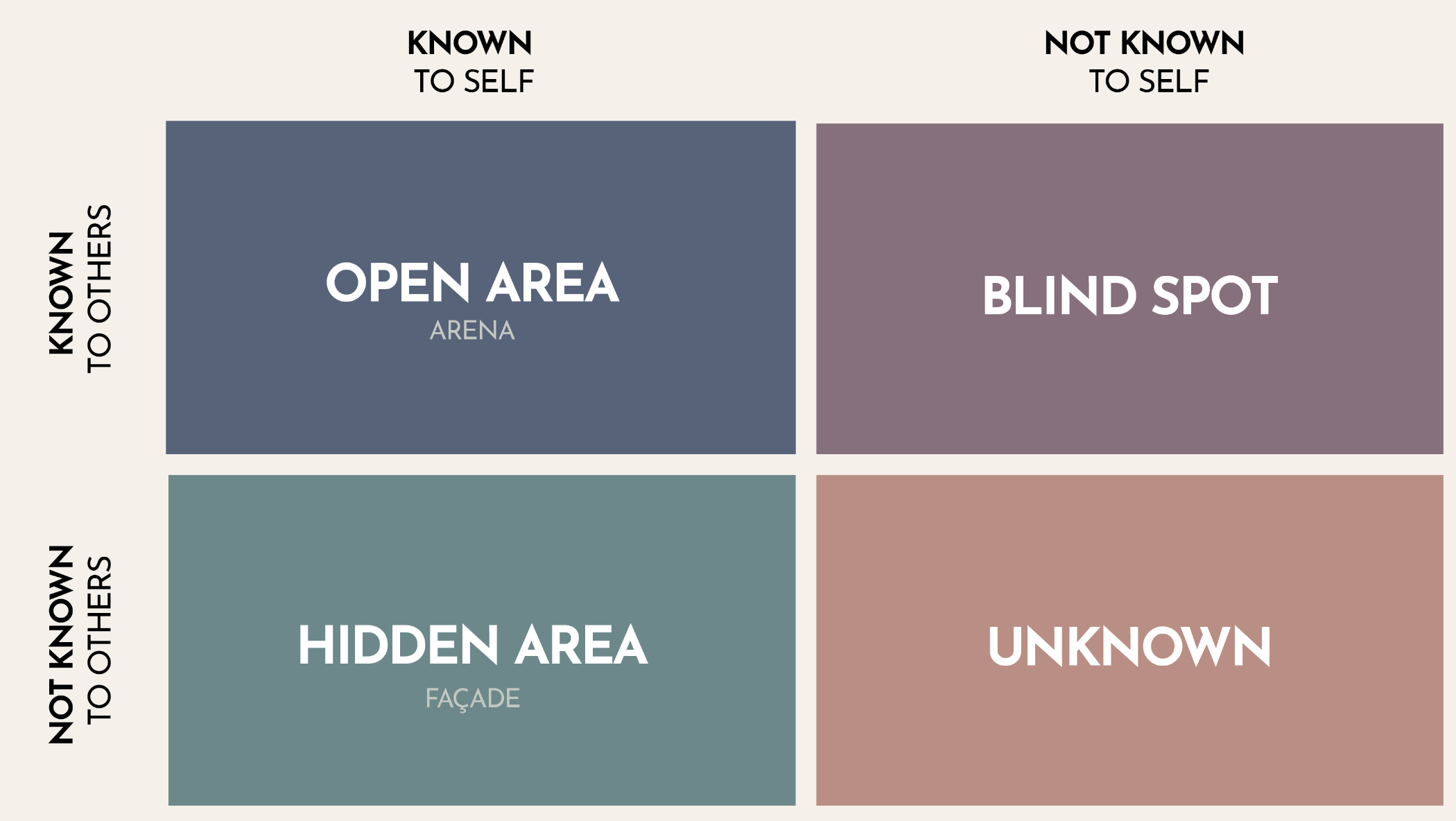
The Johari Window organizes personal information according to whether it is known or unknown to oneself and to others.
Dimension Definition Open/Public Self Information known both to the person and to others. Blind Self Information other people notice but the person does not recognize. Hidden/Private Self Information the person knows but chooses not to share with others. Unknown Self Qualities, abilities, or experiences not yet known to the person or to others.
C. Perceiving and Presenting Self
Self-perception is how a person understands their qualities, abilities, feelings, and experiences.
This is basically just "Who am I?"
People also understand themselves through social comparison, which can encourage growth but lower confidence if unfair or unrealistic.
Term Definition Self-concept How people see and describe themselves. Self-esteem How people value and feel about themselves. Self-efficacy Belief in one’s ability to complete a particular task. Actual self Who a person believes they are at present. Ideal self The person someone wants to become.
Self-presentation is the way people use communication and behavior to create an impression in different situations (e.g. dressing neatly for an interview, acting warmly at a family gathering, curating social media posts).
Positive self-presentation should remain honest. Being a fraud means you're going to switch it up to make a good impression on everyone else, to everyone. Don't be afraid to be judged.
Self-Perception Biases and Self-Talk
Self-talk is the internal dialogue people direct toward themselves. It can occur naturally or be used intentionally to guide thoughts and actions.
Type Effect Positive self-talk Encouraging and constructive; helps a person stay focused, confident, and motivated. Negative self-talk Discouraging and overly critical; will increase stress, reduce confidence, and make challenges harder to manage.
This is like the difference between "I'm in a tough spot, but I will do it" and "I'm such a loser, I'm never gonna get this done"
That being said, people don’t always perceive themselves accurately.
Self-perception biases are mental patterns that cause people to focus on incomplete information which has a high chance of making them form inaccurate assumptions or unfair judgements towards themselves.
Bias Definition How to Manage It Negativity Bias Giving greater attention/importance to negative experiences than positive ones (e.g. remembering one criticism over several praises). Balance it out instead of dumping pessimism on yourself. There’s going to be some good, even the corny “It’s gonna be a learning experience”. Confirmation Bias Noticing and accepting information that supports an existing belief while overlooking evidence that challenges it. Examine evidence and stop looking for stuff that agrees with you. That’s one way to become stupid. Spotlight Bias Overestimating how much other people notice or care about one’s appearance, behavior, or mistakes. Assess the situation realistically, view it from another’s perspective, and get feedback from a ‘normal’ person around you that would fit in to the view of a crowd. Fixed-Mindset Bias The belief that abilities and personal qualities cannot be significantly improved, causing avoidance of challenges. Don’t believe change doesn’t happen. Use language that recognizes the possibility of learning (“I cannot do this yet.”) False Consensus Bias Assuming that other people share your opinions, preferences, or behavior more than they actually do. Don’t assume without evidence and listen to others’ perspectives
By the way, those biases were in the modules, just untaught.
Managing these biases means to examine your thoughts to be fair on a matter. Some things to remember just in case:
- Is this thought based on complete evidence?
- Am I making assumptions about myself or others?
- Is there another way to understand the situation?
- What balanced statement can guide my next action?